Why Insects Belong in Every Classroom
Cradle two handfuls of forest soil, and you cradle thousands of lives — insects, microbes, communicating, decomposing, competing, constantly reshaping the earth we stand on — more biological complexity than any textbook can convey. This is the real face of biology: dynamic, tangled, and alive. Yet this is precisely the kind of complexity our classrooms too often filter out.
As the world warms, ecosystems destabilize, and antibiotics fail, our students will inherit challenges that can't be solved by memorizing isolated facts. Climate change, biodiversity loss, and microbial resistance are systems problems — they demand thinking that sees networks, feedback loops, and hidden interdependencies.
We need entry points into that complexity — ways to help students encounter science not as a list of rules, but as a web of relationships. Insects are ideal. They’re ancient, ubiquitous, cheap, ethically manageable, and intrinsically interdisciplinary. A termite, cockroach, or blowfly can open doors to ecology, evolution, microbiology, behavior, and climate science. Insects aren’t just curriculum content — they’re a lens for learning to think in systems.
That’s why every student deserves the chance to see the world like an entomologist — to think across scales and understand how the smallest lives steer planetary cycles.
If classrooms struggle to convey systems thinking, it's because we are not giving them the right tools. Insect-based curricula offer a practical, scalable, and profoundly generative way to close that gap.
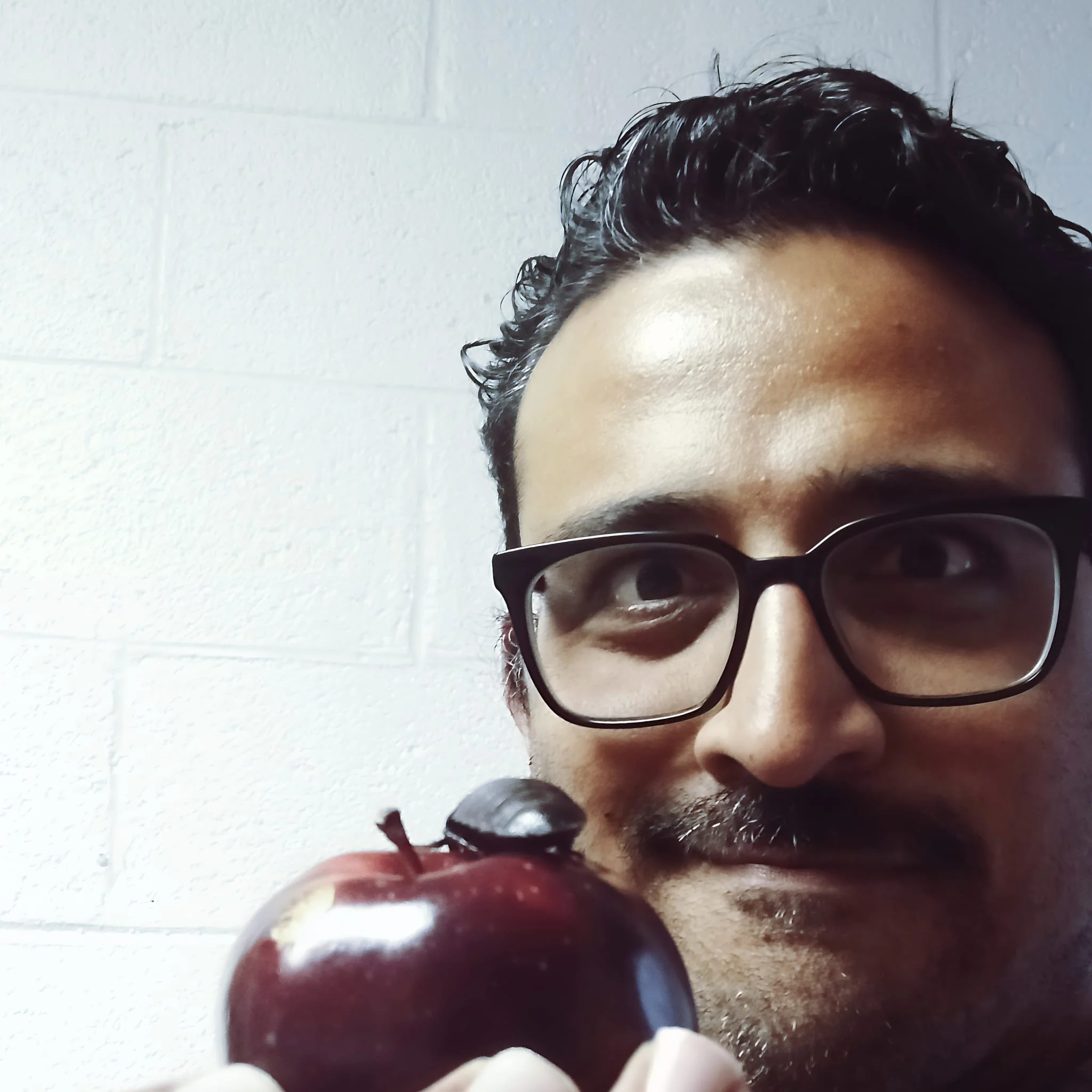
Visitors gather at the "Bug in a Bug" booth, hosted by the Microbiology Graduate Student Association (MBGSA) at NC State University, during the annual BugFest (September 2025) -- a lively and interactive celebration of entomology held by the North Carolina Museum of Natural Sciences. BugFest is the largest bug-themed event of its kind in the U.S., drawing thousands of guests to explore the fascinating world of insects through science-based exhibits, live demonstrations, and hands-on learning.
Start Here: Building Systems with Insects
If you want students to think in systems, give them a reason to build them. The following activity ideas use live insects and simple materials to help students construct and revise models of biological processes — not just observe them.
Microhabitat Modeling (ants or termites, uses live insects):
Students build habitats with varied food sources, moisture, or barriers, then track how insect behavior shifts. They draw and revise habitat-behavior maps, modeling environmental feedback and collective adaptation.Decomposition Timeline (springtails or fly larvae, uses live insects):
Students assemble sealed compost jars, then construct layered diagrams or annotated timelines of the system’s changes. As moisture, odor, and insect activity evolve, so do their models of decomposition and succession.Pollination Backtracking (local pollinators):
Starting with a snack or fruit, students trace backward: What insect helped grow this? They map out invisible connections — insects, plants, seasons, geography — constructing network diagrams that link everyday food to global ecosystems.
Michael Welsh (a grad student in the Mikaelyan Lab at NC State) gives a young visitor a close look at the fascinating process of trophallaxis in termites— how they share nutrients and symbiotic microbes. Location: BugFest, the largest insect-focused science festival in the US.
The Problem: A Gap in How We Teach STEM
Despite calls for interdisciplinary learning, K–12 science education remains deeply fragmented. Even within biology, complexity is flattened: food chains replace food webs; species replace systems. Without making students develop the ability to think across scales and domains, we risk graduating students who can recite the carbon cycle without ever linking it to microbial activity, soil health or climate feedback. When complexity collapses, inquiry narrows – leaving little room for open-ended questions.
Insects, ironically, are often overlooked, despite being among the most accessible — and, in my biased view, most charming — systems teachers we have. They’re everywhere: in forests, cities, schoolyards. Yet in most curricula, they appear only in isolated metamorphosis or pollination units.
This is a missed opportunity. Available in a dazzling array of forms and colors, insects are observable, ethically viable to study, and conceptually rich. They embody the intersections we so often isolate: their behaviors are biochemical; they naturally resist being taught in disciplinary silos. A single observation can lead into behavior, physiology, microbiology, agriculture, or public health. Their fascinating lives draw students into complexity and open-ended inquiry—essential components of critical thinking and 21st Century Skills.
The Solution: Insect-Based Curricula as Systems Literacy Tools
If classrooms struggle to convey systems thinking, it's because we are not giving them the right tools. Insect-based curricula offer a practical, scalable, and profoundly generative way to close that gap.
As an example, in the International Microbiology Literacy Initiative (IMiLI) modules called “topic frameworks”, students explore termite symbiosis — the gut microbes, the cellulose they process, and the broader ecological impacts. A termite becomes more than an insect; it’s a living model of biological interdependence. Our blowfly module offers another lens: decomposition, public health, forensic science — (Yes, like in CSI: blowfly larvae are often used to estimate time of death based on their age).
Nature's cleanup crew—with a dark side. This illustration, created for the International Microbiology Literacy Initiative (IMiLI), shows how blowflies and their maggots play diverse roles in both ecosystems and human society. Maggots aid in decomposition, helping recycle nutrients in the environment. Forensic scientists use blowfly development stages to estimate time of death at crime scenes. In medicine, maggot debridement therapy employs sterile larvae to clean infected wounds. However, blowflies can also act as vectors of disease when their larvae develop on contaminated matter, posing health risks to humans and animals.
These topic frameworks offer rich introductions to interdisciplinary phenomena, but to truly succeed in classrooms, they should be co-developed with educators. Teachers bring essential insight into student needs, pacing, and classroom realities – without which even the best scientific content can fall flat.
These are not just bug labs – they are entry points into ecological modeling and interdisciplinary reasoning that students rarely encounter until late in their education – if at all. When students study insects, they’re not just learning biology. They’re learning to think in systems—and this is key to functioning in the modern world.
What followed wasn't just curiosity – it was a paradigm shift. Students and visitors alike started asking systems-level questions
Case Study — When Insects Shift Your Perspective
Sometimes, all it takes is a single moment to rewire how a student sees the natural world. One of my graduate students recently ran a live demonstration at the North Carolina Museum of Natural Sciences, using termites to showcase trophallaxis – the process by which social insects share gut fluids, microbes, and chemical information. (Yes, trophallaxis means communicating by barfing into each others’ mouths). With a bit of fluorescent dye, visiting school children watched as one termite transferred a droplet of gut fluid into another’s mouth, with ripples of gasps in the crowd. The dyed droplet glowed bright green in the recipient's translucent abdomen.
What followed wasn't just curiosity – it was a paradigm shift. Students and visitors alike started asking systems-level questions: Wait, does this mean the whole colony shares the same microbiome? Can a sick termite infect the rest? Are these microbes doing digestion for them? How do they know who to feed?
In a span of minutes, the audience had moved from observing a behavior to hypothesizing about microbial ecology, evolutionary strategy, immunology, and communication. No one prompted them to make those connections. The insects did.
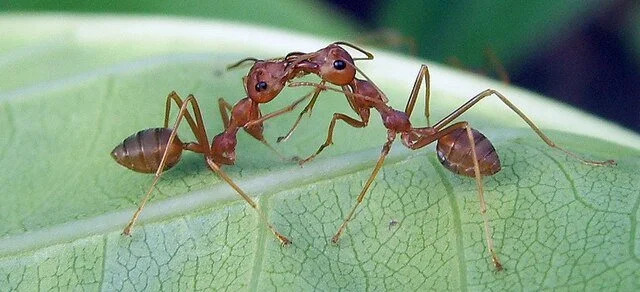
Trophallaxis
A phenomenon that will fascinate your students :)
Call to Action
If we want a generation capable of navigating climate disruption, biodiversity collapse, and microbial resistance, we need to rethink not just what we teach, but how we teach it. Insects – with their complexity, accessibility, and interdisciplinary richness – offer a way forward. Insect-based science education isn’t niche – it’s a scalable prototype for interdisciplinary learning. With the right support, we can create a national (even global) model for systems-based STEM education. Insects included. Batteries still not required.
To scientists: Don't wait for "outreach day" or "outreach week." Start thinking like a curriculum designer. Reach out to K-12 educators and professional curriculum developers who know how to adapt materials for the classroom to partner. If you go it alone, you are limiting your impact. Through collaboratively building open-ended investigations, scalable models, and partnerships we can empower students with transferrable skills of systems thinking and data interpretation. Your research has more public value than you realize — but only if it resounds with your target audience.
To educators: Seek out local entomologists, ecologists, and microbiologists. We are out here, and many of us are eager to collaborate. Many scientists have open DMs on BlueSky, and AI tools can actually be helpful here: e.g. “Give me 5 biologists near X city that mention outreach on their website or profile.” You don't need to become an insect expert overnight. What you need is curiosity — and a willingness to let your students wrestle with real-world messiness.
To institutions: Invest in this model. Fund co-designed curricula. Support teacher-scientist partnerships. Treat public science not as an afterthought, but as a critical infrastructure for democratic learning.
It starts with two handfuls of forest soil — and a question. From there, we can build a new way of teaching science: systems-first, insect-powered, and anchored in deeper learning.