Spatial thinking is an essential part of mathematical success. It helps students visualize relationships, recognize patterns, and understand how shapes interact in space.
Preview of the hands-on tiling activities students will do
What is Spatial Reasoning?
At its core, spatial reasoning is the ability to visualize, manipulate, and understand objects and relationships in space. These skills are essential not only for success in mathematics but also for fields such as engineering, architecture, computer science, and design.
Whether students are solving geometry problems, building models, or exploring real-world designs, strong spatial reasoning skills support deeper mathematical thinking.
Why Hands-On Learning Works
At one time, educators who wanted to help students develop this skill set had few resources at their disposal. The standard of practice in math class has been to repeat the most abstract principles in slightly different settings until students have finally absorbed them. But in the past few decades, an alternative approach has emerged alongside new research in neurocognition.
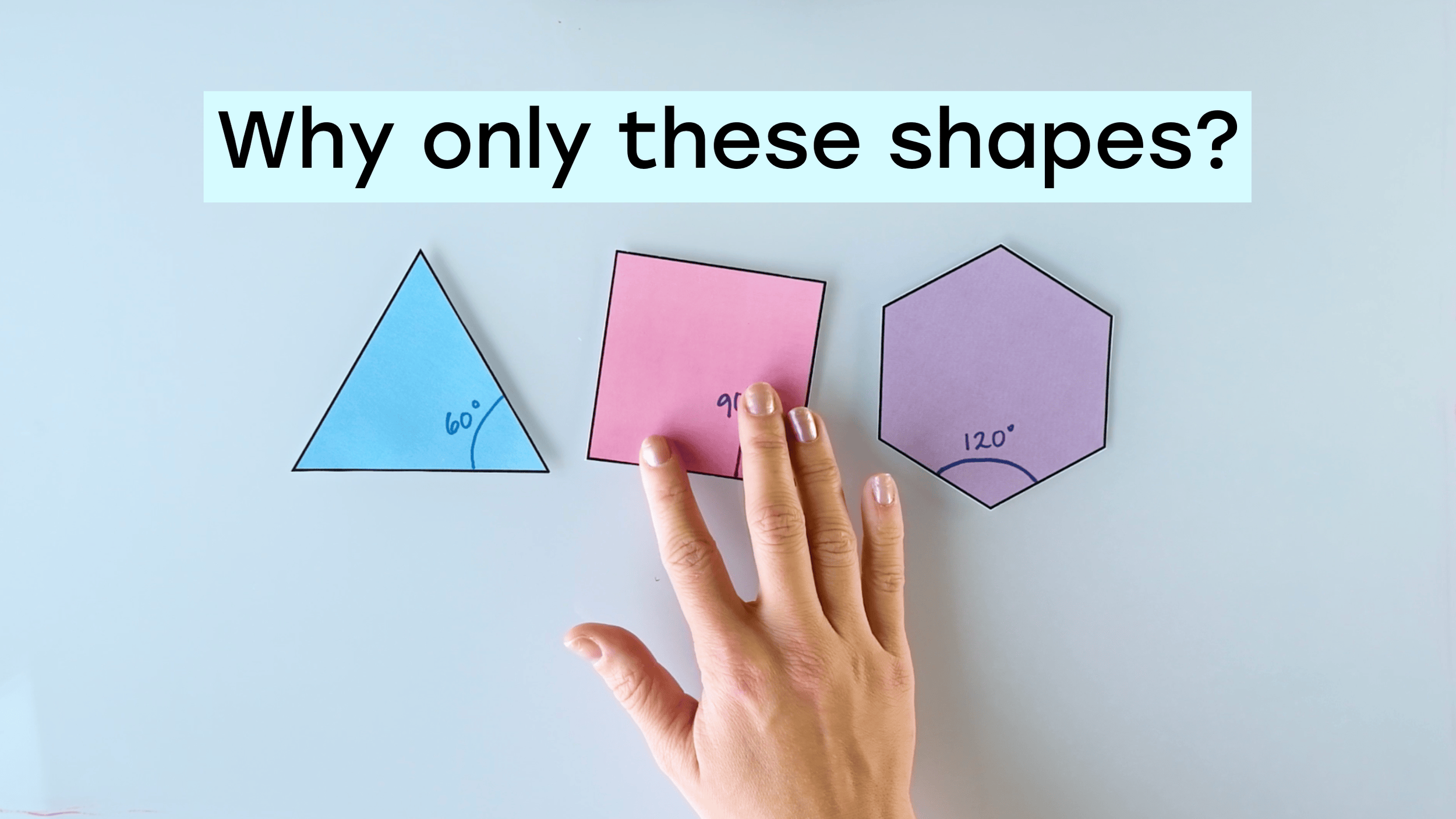
Students learn why these are the only shapes that tile in a flat plane.
Embodied cognition is the idea that sensory information from interacting with our environments is an important part of the learning process. The experience of making or manipulating objects for a specific purpose can be stored as a kind of sensory memory that supplements abstract learning. Even simple exercises like diagramming and sorting objects can help students access this superpower.
In math class, embodied cognition promises that hands-on activities in which students interact with objects in their environment can reinforce their understanding of abstract mathematical principles.
In their introduction to the 2012 special edition of the Journal of the Learning Sciences on bodily engagement in mathematical learning, Rogers Hall and Ricardo Nemirovsky write that research in cognitive neuroscience supports the claim that “the embodied mind is extended by changing the environment.” In other words, interacting with the physical world increases a student’s capacity for learning and memory.
Using this approach, STEAM educators have explored manipulables (tangible objects that students move with their hands to visualize abstract concepts), art projects, and 3D printing as ways to bring students’ sensory attention into the classroom.
Teaching Geometry with Manipulatives: The Joy of Patterns
The second lesson of The Science of Craft starts with observation. Students sort their tiles according to shape, inadvertently reminding themselves of familiar relationships between angles, sides, and corners in regular polygons. What seems like a simple exercise quickly becomes an exploration of geometric and spatial reasoning.
Then the experimentation begins. Starting with triangular tiles, students attempt to build repeating patterns that perfectly cover the planar surface of the desk without gaps or overlaps. For each experiment, students note whether that dream tiling outcome is possible and any other observations they have.
As they tile their way through all six regular polygons and then devise their own patterns using combinations of two, the sensory data from each attempt reinforces the abstract rules that will be articulated next.
These hands-on math activities encourage students to discover mathematical relationships rather than simply memorizing them.
Activities like these are strong examples of teaching geometry with manipulatives. Instead of hearing about geometric principles, students actively test them. They see how angles combine, how shapes fit together, and why certain patterns repeat while others fail.
For educators looking for hands-on geometry activities for middle school, tiling investigations offer a particularly rich learning experience. Students engage in problem solving, pattern recognition, and mathematical communication while developing spatial reasoning skills that extend far beyond a single lesson.
Developing Spatial Reasoning Skills: A Wrinkle in Space
Of course, the tiles don’t always line up. By design, a hands-on activity leaves room for students to bend the rules somewhat, whether by accident or out of curiosity. Students naturally test boundaries, make mistakes, and ask questions that lead to deeper understanding
Tiling activities that stick to the plane are perfect for reinforcing geometric relationships students have already heard in math class. But things get complicated when curvature enters the picture.
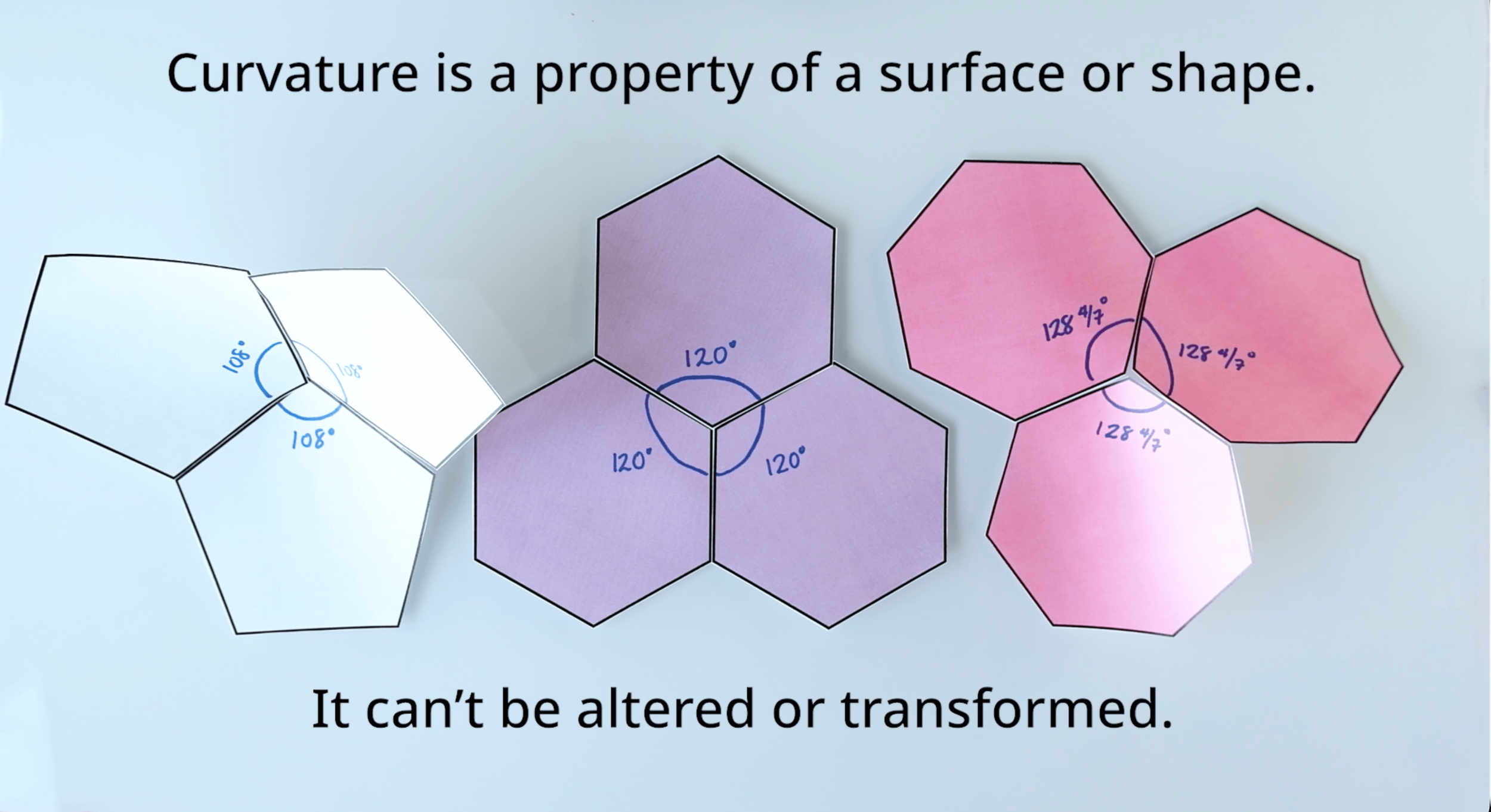
Therefore, gaps and overlaps between ill-fitting tiles present a dilemma: should the teacher guide students back to the familiar territory of tiling the plane, or encourage them to find out what happens when the 360-degree rule no longer applies?
As scary as it might seem, there are strong arguments for pushing students beyond the realm of their existing knowledge. For one thing, the dynamic relationship between the learner and the tools of their learning–in this case, between the student and their tiles–is the core of what makes embodied cognition work. Letting students feel the consequences of using imperfect shapes or connections strengthens, rather than confuses, their embodied understanding of the geometric principles at play.
These moments help students develop mathematical thinking by treating mathematics as a process of inquiry rather than a collection of facts. Using manipulatives to teach geometry involves the physical experience of testing, adjusting, and rebuilding patterns, which reinforces concepts in ways that worksheets alone often cannot.
One of the strengths of hands-on math activities for middle school is that students are not simply observing geometric relationships; they are experiencing them directly.
From Two Dimensions to Three: Building Spatial Reasoning Skills
The lesson becomes even more powerful when students move beyond the plane.
Trying to coax sloppy or incorrect tiles into flawless patterns also offers a glimpse of the final section of Lesson 2. As they experiment with imperfect tilings and flexible connections, students begin to discover that two-dimensional shapes (2D) can form three-dimensional (3D) structures.
Students encounter 3D structures every day of their lives, which means they are surrounded by opportunities to observe or interact with these shapes. By inviting them to physically transform a collection of 2D tiles to gapless 3D structures, as in the Tile Explorer activity, teachers encourage students to form connections between the lesson’s content and the world they actually inhabit.
This transition connects classroom learning to architecture, engineering, design, and art. Students encounter geometry examples constantly, such as in buildings, packaging, furniture, mosaics, and natural structures. By physically constructing three-dimensional forms, they begin to see mathematics as a tool for understanding the world around them.
This type of exploration in the Tile Explorer activity supports both spatial reasoning math and interdisciplinary learning by connecting geometry to real-world applications.
By physically constructing three-dimensional forms, they begin to see mathematics as a tool for understanding the world around them.
Geometry, Art, and Interdisciplinary Learning
One of the most exciting aspects of tiling activities is their ability to create interdisciplinary connections in math.
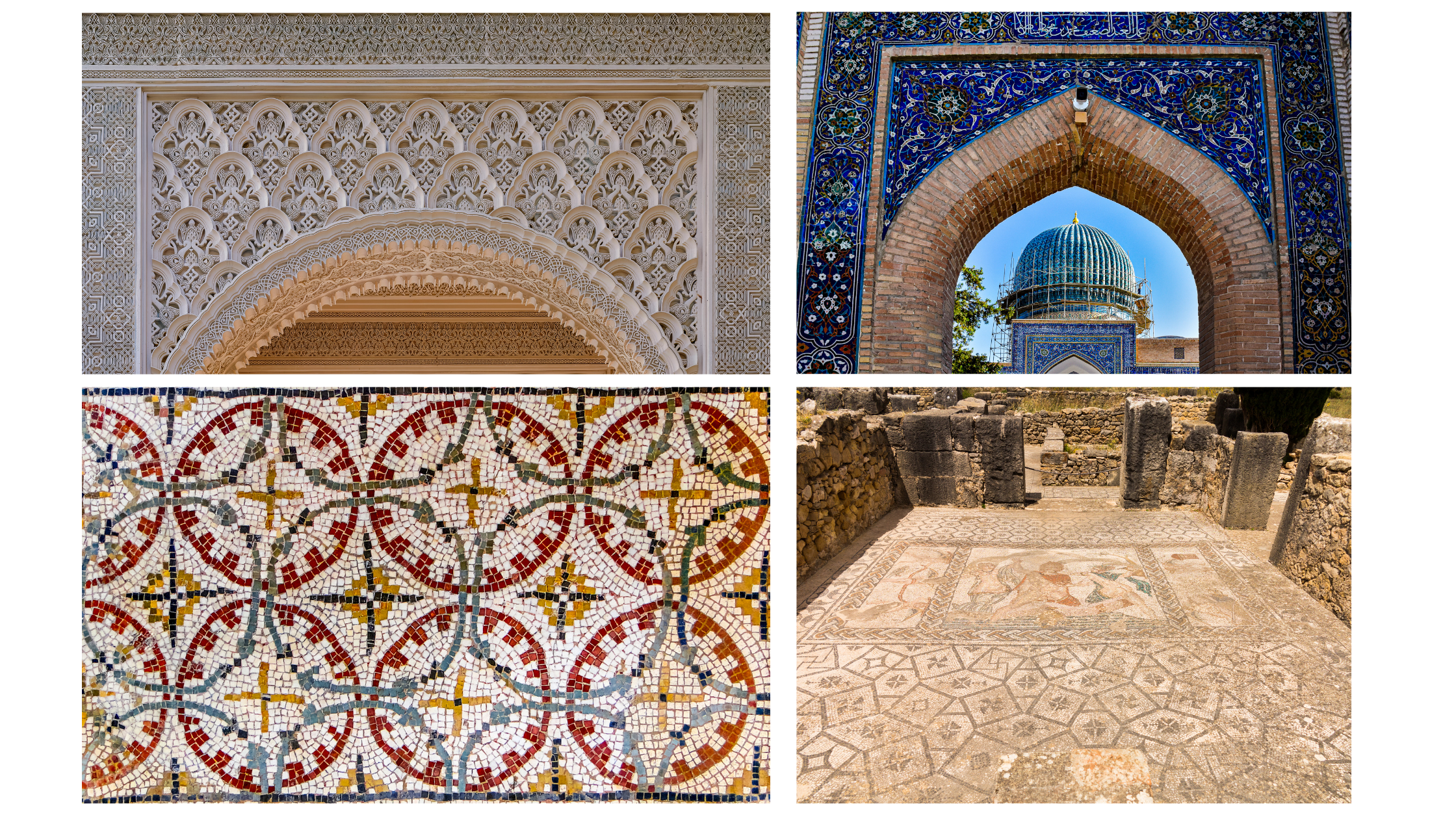
This lesson will change how students see the world around them.
Students quickly discover that geometry and art share a common language of pattern, symmetry, balance, and design. Historical mosaics, tessellations, textiles, and architectural details provide compelling geometry in art examples that demonstrate how mathematical ideas appear across cultures and disciplines.
The benefits of interdisciplinary learning extend beyond engagement. When students encounter the same concepts in multiple contexts, they are more likely to retain and transfer their knowledge. A lesson that connects mathematics, art, engineering, and design encourages students to see relationships rather than isolated subjects.
For educators interested in project-based learning in math, tiling investigations offer an ideal starting point. Students can design original patterns, analyze structures, create artistic compositions, and build three-dimensional models while developing core geometry skills.
Why Hands-On Learning Activities Strengthen Mathematical Thinking
Hands-on geometry activities give students opportunities to develop these abilities through exploration rather than memorization. By sorting, building, testing, and creating, students engage in the kind of active learning that strengthens both understanding and retention.
Research may now provide a scientific explanation for why these approaches work, but teachers have understood their value for generations. When students learn through meaningful interaction with materials and ideas, mathematics becomes something they can experience, instead of just something they can calculate.
Through hands-on math activities that combine geometry, creativity, and exploration, students do more than learn mathematical rules. Using math manipulatives in the classroom helps them develop the spatial reasoning skills and confidence needed to make sense of the complex world around them.
The Science of Craft
Building New Materials with Old Techniques
 logo](https://storage.googleapis.com/gp-cloud/lessons/SciCraft_en-US/Copy-of-Copy-of-NSF_logo_sm.png)
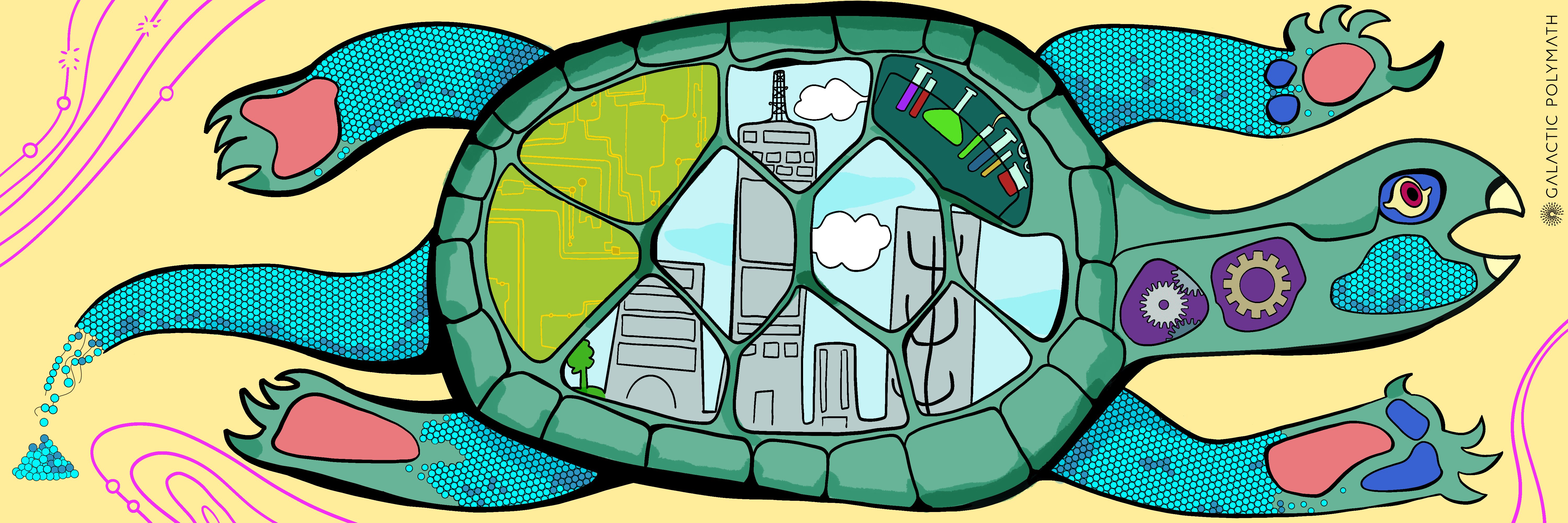
STEM is older and more expansive than you might imagine. Crafted materials, like knit sweaters and woven baskets, were our ancestors’ solutions to everyday problems. In this lesson, we learn the geometry and physics of traditional crafts, and explore how these technologies help us engineer new solutions for the future!

Frequently Asked Questions
-
Spatial reasoning is the ability to visualize, manipulate, and understand objects and relationships in space. These skills help students recognize patterns, interpret shapes, solve geometric problems, and understand how objects fit together. Spatial reasoning is an important part of mathematical success and is also valuable in fields such as engineering, architecture, computer science, and design.
-
Spatial reasoning supports many aspects of mathematical thinking, including geometry, measurement, pattern recognition, and problem solving. Students with strong spatial reasoning skills are often better able to visualize mathematical concepts and make connections between abstract ideas and real-world situations.
-
Hands-on learning activities are experiences that allow students to actively engage with materials, tools, or objects as part of the learning process. In mathematics, examples include building models, sorting shapes, creating patterns, using math manipulatives, and constructing geometric structures. These activities help students develop understanding through direct experience and exploration.
-
Teaching geometry with manipulatives allows students to explore mathematical concepts in a concrete way. By physically handling shapes, measuring angles, and building structures, students can observe geometric relationships firsthand. This approach often improves engagement, understanding, and long-term retention.
-
Interdisciplinary learning helps students connect mathematics to other subjects such as art, engineering, science, and design. These connections can increase engagement, improve retention, and help students see how mathematical concepts apply beyond the classroom. Activities that combine geometry and art, for example, allow students to explore both creativity and mathematical reasoning at the same time.
-
Hands-on geometry activities can include tiling investigations, tessellation projects, pattern block explorations, geometric art projects, 3D model building, and design challenges. These activities encourage students to explore shapes, patterns, symmetry, and spatial relationships while developing mathematical thinking skills.