Culturally Responsive STEM Curriculum: Indigenous Beadwork STEM Activities for Middle School
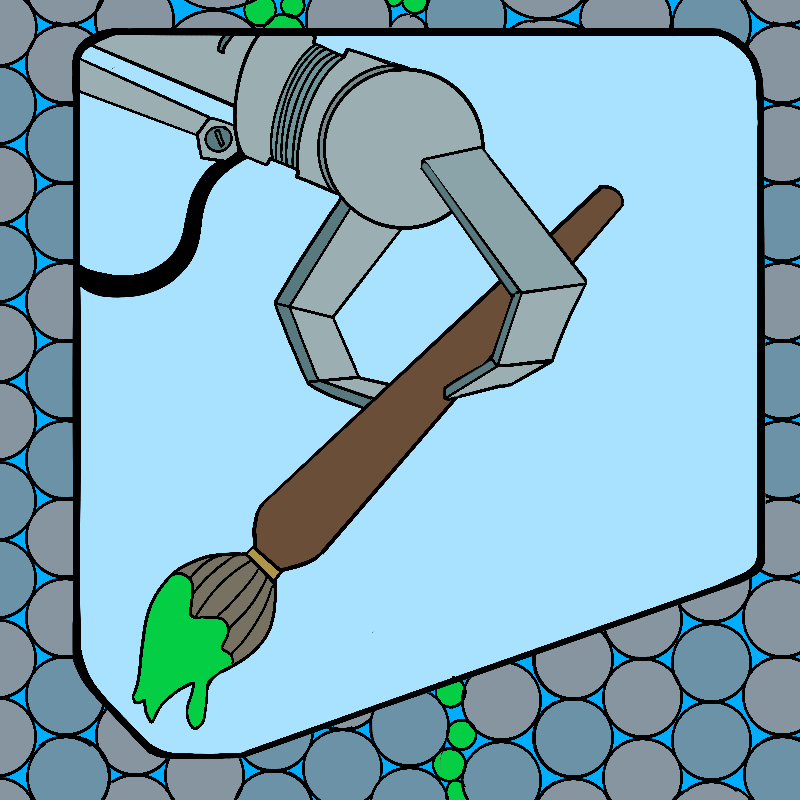
Crafts are much more connected to STEM that students often realize. (Original artwork by Anna Wilkins)
What do students think of when they think of scientists or engineers?
Stereotypes about the faces behind the research come from everywhere: popular media, teachers’ offhand comments, even the images in a science textbook.
Together, these messages build an image in students’ minds of STEM professionals as a determined cog in a well-established machine – in other words, nothing like them.
That’s why culturally responsive STEM education is so important, especially in middle school STEM classrooms, while identity and confidence are developing.
If you're looking for hands-on STEM activities for middle school, culturally responsive approaches can transform your classroom. By combining STEM projects for middle school with real-world cultural practices, students can engage more deeply, see themselves in STEM, and recognize its relevance in their own lives.
- How does shape give a material new properties?
- Can we use geometry to predict structure?
- Where do the principles of mechanics and motion show up in the materials we use every day?
- NGSS | MS-ETS1-4: Develop a model to generate data for iterative testing and modification of a proposed object, tool, or process such that an optimal design can be achieved
- NGSS | MS-ETS 1-1: Define the criteria and constraints of a design problem
- CC Math | HSG-MG.A.3: Apply geometric methods to solve design problems
- CC Math | HS-PS2-6: Communicate scientific and technical information about why the molecular-level structure is important in the functioning of designed materials
Culturally Responsive STEM Activities: Expanding who participates in STEM
Recent research suggests that the effect of this misperception is more complex than it seems. Students often assume that scientists fit into the stereotypical mold of male, white, upper-class, and mathematically inclined. These impressions can trigger stereotype threat, in which students from groups historically excluded from STEM careers suffer under the extra cognitive load of that stereotype.
But these messages about scientists also impact how students see scientific work: what inspires it, where it originates, and how it develops. Science itself can start to seem like a remote pursuit, isolated from all other aspects of a scientist’s life, rather than a way to engage more deeply with the physical world.
This is where culturally relevant pedagogy and culturally responsive teaching can transform learning. By integrating students’ identities and cultural backgrounds into lessons, you can make STEM meaningful, accessible, and engaging.
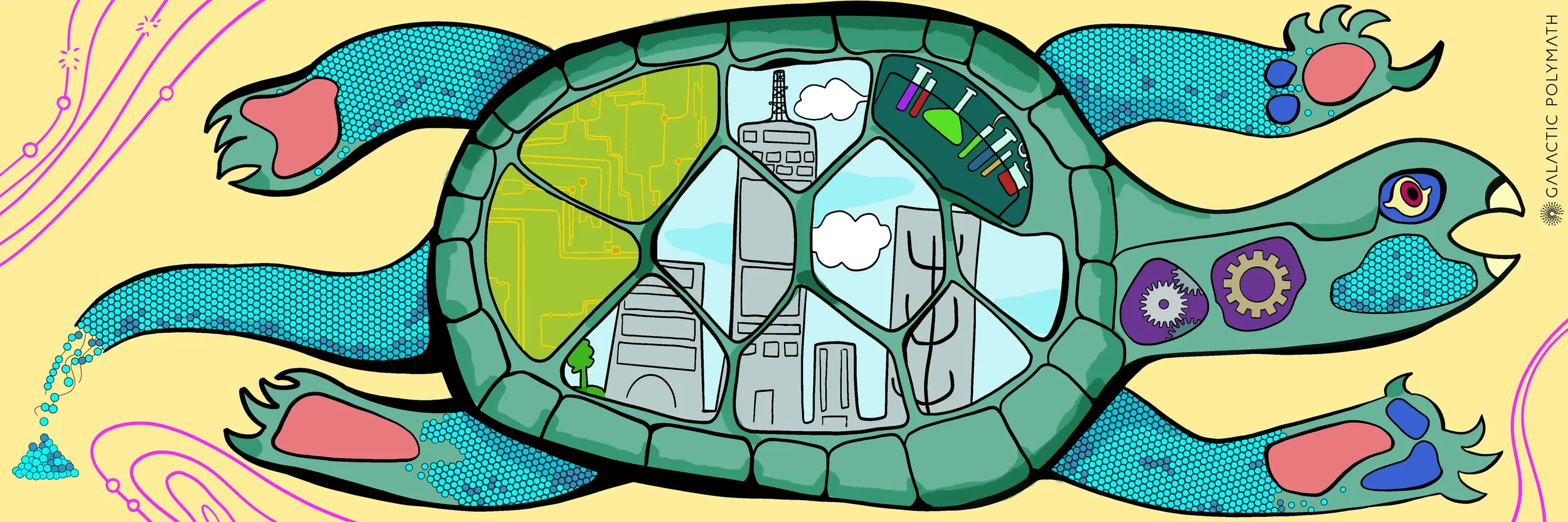
Indigenous Beadwork Meets Mechanical Metamaterials
Scientists from marginalized groups understand this dynamic all too well.
Dr. Trevor Jones, a scientist and member of the Lac Courte Oreilles Band of Lake Superior Chippewa (Bear Clan), offers a great example of culturally responsive STEM teaching in action.
Growing up in the suburbs, Dr. Jones saw little representation of his Indigenous culture outside his home. He went into the sciences knowing he would stand out–both because of his background and because he retained his many non-science hobbies in sharp contrast to his peers. “In many ways,” Dr. Jones observes, “I don’t fit the stereotype as a scientist.” Growing up, he was surrounded by the expert craftspeople of his extended family.
For years, Jones’ mother and other relatives had been producing stunning beaded artworks using seed beads. Indigenous beadwork and other crafts were an important part of Jones’ identity and personal life, but they were firmly separated from his work as a scientist–at first.
Culturally Responsive Engineering in the Classroom
One day, Professor Jones confided in his mother that his research on mechanical metamaterials had run into a funding annoyance: the uniform spheres he was using were too expensive. Jones’ mother suggested using some of her extra beads in his work instead.
That’s when Jones had a moment of serendipity. Just like the origami and kirigami he had been studying, beadwork offered a way to create structures using unique linkages that offered endless opportunities for creative construction.
Beads were, in other words, a perfect starting point for an engineered metamaterial (whose properties arise from deliberately designed internal structure, rather than chemical composition). And unlike engineering based on other ancient crafts, beadwork-inspired metamaterials were completely absent from his field.
“Bendy bot”—a beaded robot in Dr. Jones’ office
Beading the future
Suddenly, Professor Jones was considering the thrilling possibility of a union between the two worlds he inhabited. “How can I take this craft that is so inherent to my heritage and understand it as a material that has useful properties in an engineering context?”
That simple question transformed Jones’ approach to metamaterials, demonstrating how culturally responsive STEM education can:
Connect cultural knowledge with scientific inquiry
Encourage creativity and problem-solving
Expand students’ understanding of STEM and what counts as STEM
Today, Dr. Jones’ engineering laboratory at Carnegie Mellon, MInEnS Lab, is as much a makerspace as a research center. Beadwork encourages his team to think critically about the relationships between materials and the repeating elements that give them their unique characteristics. It’s the ultimate form of culturally responsive teaching: the inspiration flows in multiple directions.
“How can I take this craft that is so inherent to my heritage and understand it as a material that has useful properties in an engineering context?”
Craft is science
None of this would have been possible without Jones’ sustained connection to his family and culture–or his willingness to bring those parts of himself to his life as a scientist.
Jones also credits his background for his unique approach to science. In Ojibwe culture, the value of wisdom–of knowledge received and translated from elders–is uncontested. It’s that intergenerational respect that inspired him to invite his mother’s wisdom into the laboratory.
“It’s not just knowledge that you gain,” from talking to elders, he explains, “but the wisdom of people who come before you.”
Why This Matters for Middle School STEM
Engaging students with middle school STEM lessons builds both skills and identity. It’s a critical time for students. When they see their cultures and interests reflected in STEM:
Engagement increases
Confidence grows
More students pursue STEM pathways
This is why STEM activities for middle school should include hands-on, culturally meaningful experiences.
Hands-On STEM Activities for Middle School: NGSS Geometry & Engineering Unit (Grades 6–9)
Your students can follow in Dr. Jones’s footsteps.
Bring culturally responsive learning into your classroom with one of the most engaging STEM activities for middle school: a hands-on, NGSS-aligned engineering unit that blends math, engineering, culture, creativity, and project-based learning.
The GP Team has developed a fun 3-part unit, The Science of Craft: Building New Materials With Old Techniques, that lets students use hands-on crafting activities to explore how structure—not just material—gives objects new properties.
With this unit, Dr. Trevor wants students who don’t necessarily see themselves as “good at science and math” that they are actually more connected to STEM than they know. Through experimentation and supporting videos crafted with Dr. Trevor and the GP Team, students will learn about non-Euclidian geometric principles and get curious about tiling patterns and geometry in their daily lives.
The unit is ideal for middle school STEM classes, including STEAM, science, and math classes in grades 6-9, and is free to you thanks to funding from the National Science Foundation.
This engaging, hands-on unit blends:
Math STEM activities for middle school (geometry, tiling, non-Euclidian ideas)
STEM projects for middle school (designing bead-based structures)
The engineering design process
So if you’re looking for meaningful, engaging STEM ideas for middle school, this unit is ideal for math and science classes, STEAM programs, and project-based learning environments.
Check it out and bring culturally responsive STEM learning to life in your classroom!
The Science of Craft
Building New Materials with Old Techniques
 logo](https://storage.googleapis.com/gp-cloud/lessons/SciCraft_en-US/Copy-of-Copy-of-NSF_logo_sm.png)
STEM is older and more expansive than you might imagine. Crafted materials, like knit sweaters and woven baskets, were our ancestors’ solutions to everyday problems. In this lesson, we learn the geometry and physics of traditional crafts, and explore how these technologies help us engineer new solutions for the future!

FAQ: Culturally Responsive STEM for Middle School
-
Culturally responsive STEM activities for middle school connect science, technology, engineering, and math concepts to students’ cultural backgrounds and lived experiences. These activities increase engagement by making learning more relevant and meaningful.
-
Popular STEM projects for middle school include engineering design challenges, geometry-based art projects, coding activities, and hands-on builds. Projects like Indigenous beadwork modeling allow students to explore math and engineering through culturally meaningful practices.
-
Culturally responsive teaching helps students see themselves in STEM fields, increasing confidence and participation. It also challenges stereotypes and broadens understanding of how scientific knowledge is created and applied.